Thursday, 4 November 2021

Jeremy Bentham's Ghost and Other Hospital Hauntings...


As with so many hospitals in the UK – including my creation, the Royal and Waverly, in my latest novel, In Darkness, Shadows Breathe - University College Hospital (UCH), in Euston Road, London has been extensively rebuilt and modernized since it first opened in 1906. The present hospital dates from 2004 but stands right there, next to the cruciform building that has become the haunt of a number of spirits – each with their own agenda.

UCH’s most famous inhabitant is radical social reformer and philosopher, Jeremy Bentham. (1748-1832) He is most famous for his espousal of the theory of utilitarianism – namely: “It is the greatest happiness of the greatest number that is the measure of right and wrong.” He decreed that, on his death, his body should be dissected and then be preserved as an ‘auto image’ – self-image – for posterity. His wishes were duly carried out and he is still there (at least, his skeleton is, dressed in his clothes and stuffed with straw. His head is now a lifelike wax replica.) He is sitting in a chair, his stick – which he had christened Dapple – resting next to him, in a glass cabinet in the Student Centre.
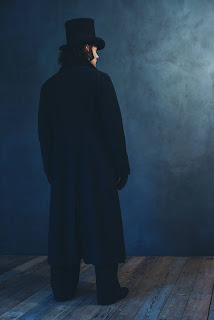

A few years ago, a mathematics teacher, Neil King, was working late one night when he heard the sound of a stick tapping along the floor, at first distant, then coming closer. He paused to see who or what was making the noise, only to be astonished when the figure of Jeremy Bentham advanced towards him. He was so close, Mr King was convinced the apparition would throw him to the ground. But it didn’t. Bentham’s ghost vanished.

Incidentally, Bentham’s real head still exists – but, after it was stolen as part of a student prank, only to be returned later – it was decided to put it out of harm’s way. Now, it only comes out for special occasions.

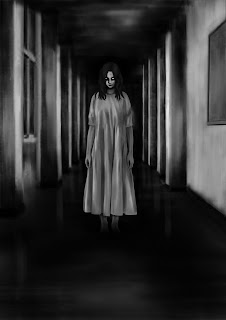
The ghost of a student provides a lesser-known haunting. She is reputed to have been called Emma Louise and she also haunts the old building. It is said if you call her name three times she will appear.

The story goes that there used to be underground tunnels linking the old building with other parts of the campus, including the accommodation quarters of Arthur Tattershall Hall. It is along those tunnels that Emma Louise would travel every day. One day however she never arrived at the hospital for her shift. She was later found dead. Murdered. The crime appears never to have been solved and her spirit wanders.
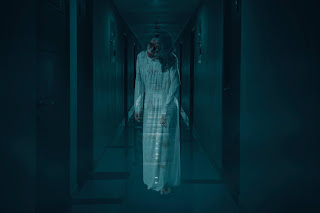

A group of students who also resided at Tattershall – in the very room Emma Louise had occupied - decided it would be fun to test out the theory of summoning the former roommate and, having duly assembled, called out her name three times. Shortly afterward, they heard laughter. But no one in their party was laughing. In fact they failed to trace the source despite their best efforts. All through the night, they heard the sound of a girl’s voice at intervals, even after they had moved into a friend’s room to escape it. They never solved the mystery.

A couple of nights later, duly returned to their own room, they found the door open. Someone – either of this world or beyond – had painted the words, “HELP ME”, “DIE”. “MURDER” and “RIP” across the wall.

A painting of famous and much-lauded 19th century surgeon, who was also a professor of surgery at University College, London, Marcus Beck, started its own tradition of supernatural activity. It seemed that, if anyone fell asleep under this picture, they would quite likely become ill and possibly even die. As a result, shutters were created and a nightly ritual of closing them in order to hide the picture from view was initiated. It became the night sister’s first duty to close them and the day sister’s first duty to open them. If this ritual was not carried out, someone would unexpectedly die. The painting in question was stolen in 2001. Its whereabouts are still unknown.

No hospital of this age would be complete without its own version of the ‘grey lady’. In UCH’s case, it is a nurse in a blueish-grey uniform who is seen only when the screens go up around the bed of a really sick person. It is generally believed that the ghost is of a nurse who unwittingly administered a fatal does of morphine and is spending eternity regretting it.
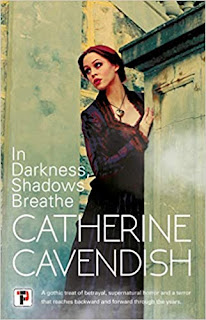


You're next...

Carol and Nessa are strangers but not for much longer.

In a luxury apartment and in the walls of a modern hospital, the evil that was done continues to thrive. They are in the hands of an entity that knows no boundaries and crosses dimensions – bending and twisting time itself – and where danger waits in every shadow. The battle is on for their bodies and souls and the line between reality and nightmare is hard to define.
Through it all, the words of Lydia Warren Carmody haunt them. But who was she? And why have Carol and Nessa been chosen?

The answer lies deep in the darkness…


images:
Shutterstock

Monday, 25 October 2021

Live and Spooky 2021 - Halloween Hijinks from Flame Tree


Polish up your crystal balls, stir that cauldron, and dust off that broomstick

It's THAT time of the year!

A whole bunch of Flame Tree authors (me included) and friends, lined up to entertain you with a veritable punchbowl of assorted scary fun

Join us for fantastical creatures, creepy stories, out-of-this-world scares and much, much more...

You can catch us all now:


THE HELLISH HELTER SKELTER

Fascinating fireside tales from some of today’s top short story writers featuring John Everson, Dan Coxon, Gwendolyn Kiste, Lucy A. Snyder, and Maria Haskins.

Watch on You Tube


THE GHASTLY GHOST TRAIN

Creature creation with master storytellers Hunter Shea, Glenn Rolfe, Jonathan Janz and Gregory Bastianelli.

Watch on You Tube


THE WICKED WHITE-KNUCKLE RIDE

Drawing inspiration from real-life stories with otherworldly authors Tim Waggoner, J.H. Moncrieff, Catherine Cavendish and Steven Hopstaken & Melissa Prusi.
Watch on You Tube


THE HIDEOUS HALL OF MIRRORS

Aliens, otherworlds, the apocalypse, horror in space! A chilling chat with spooky sci-fi scribes Brian Pinkerton, Daniel Bensen, Anne Tibbetts and J.D. Moyer.
Watch on You Tube


THE SPINE-CHILLING CAROUSEL

Female Leads & Final Girl Tropes: a breakout panel to highlight the evolution of fearsome female leads with the devilishly talented Anne Tibbets, Catherine Cavendish, V. Castro and Nadia Afifi.

Watch on You Tube


THE FEARSOME FERRIS WHEEL

A chilling conversation between genre luminaries Ramsey Campbell & S.T. Joshi, covering Lovecraft, Stoker, roots and directions in horror writing.


Watch on You Tube


THE TERRIFYING TUNNEL OF LOVE - LIVE!


An infernal live-to-air interview with leading critic and influencer Sadie ‘Mother Horror’ Hartmann & master of modern horror Jonathan Janz.


Watch on YouTube


Images:
Flame Tree Studio
Shutterstock

Saturday, 9 October 2021

The Ghosts That Will Not Leave


Hospital. The mere sound of the word can send shivers running up and down the spine. From our first mewling whimpers to our last breath, a visit or stay in a hospital can represent the most traumatic experiences of our lives. From the greatest of joys to the darkest of despairs, every hospital has seen it all repeated innumerable times.

Small wonder then that unquiet spirits make themselves manifest within their walls. It seems every hospital has its stories of unexplained sightings, sounds, feelings, and atmospheres. This is one such story. So, sit back, put another log on the fire, and get ready for a series of unexplained events in a hospital located in Britain's capital city:

In Woolwich, in the southeast of London, stood the Queen Elizabeth Military Hospital (QEMH) Before its closure in 1996 – when it was rebuilt as the Queen Elizabeth Hospital – it housed a plethora of ghosts in a number of departments. Interestingly, when they built the new hospital, they retained some of the original features. In my latest novel – In Darkness, Shadows Breathe – the Royal and Waverly Hospital is also built using material from the old structure. This opens up a whole can of dark and sinister worms, allowing evil forces from the past to infect those in the present day.

Back to the old QEMH. In the Oncology Unit – Ward 10 – the ward keys had a habit of going missing but only on the night shift, even though the nurses in charge would be certain beyond any doubt that the keys had been in their pockets. A systematic search would be made, taking care not to wake the seriously ill patients. Time and again, those keys would stay missing until mysteriously reappearing right at the moment a patient needed urgent medication in the middle of the night. The keys would turn up in plain sight – on the office desk which had been painstakingly searched earlier – on two separate occasions. One Nursing Officer became so infuriated that she demanded the ghost return the keys immediately. It did. And this demand worked every time thereafter.

Another instance of haunting on Ward 10 concerns two cancer patients – both serving soldiers. One was a male senior non-commissioned officer and the other a female of junior rank. The two were expected to make a full recovery and used to meet for a chat. They would joke that – as they were in adjacent rooms at the bottom of the ward, near to the main corridor - if one were to die, the other would come and ask if they were ready to join them in heaven.

Unexpectedly, the male officer died in the early hours while the other patients were all sleeping. As the nurses were preparing his body for transportation down to the morgue, they heard a scream from the next room. The female soldier was cowering by her bed, terrified. She said. “Tell him I’m not ready. I don’t want to go.” Her friend had done as he said he would – and come for her.


Following the rebuild and opening of the new Queen Elizabeth Hospital (QEH), parts of the old hospital building were still being utilized. Wards 3 and 4 housed elderly care, Wards 1 and 2 ( formerly a closed ward and rehabilitation ward respectively) were minor injury and orthopedic clinics. Ward 10 remained as the oncology unit. No other wards were in use and were chained up for security purposes. Physiotherapy, nuclear medicine, microbiology and phlebotomy remained, along with a newly refitted canteen. All other treatment was carried out at nearby Greenwich District Hospital.

By now Ward 10 was only half in use. The rest of that ward lay in darkness. It was in this darkness that something was busy, making banging noises. The occurrences were so frequent (and unexplained), that staff had grown accustomed to them. They gave the perpetrator a name, “Jimmy” and wisely let him get on with it.

Around six months after the changes had been made, an auxiliary nurse from Ward 4 went out of the ward and down to a small office area to have a smoke at around 1a.m.. but instead of a few precious moments to relax, she had the fright of her life. A huge, smoky black shape drifted through the wall to her left, floated in front of her and disappeared through the opposite wall. She raced back to the ward, frightened half out of her wits.

Some time later, a patient of Ward 4 was looking out of her window into the garden and saw what she was certain was a nun, dishing out soup. Needless to say, there were no nuns on the premises – and no soup kitchen either! As for what may have happened in the past…

Ward 4 seems to have been a veritable hive of activity – and from a variety of causes. One elderly lady reported that she had heard and seen little children running around the corridor and her room. Thinking maybe she was having a mental episode, the nursing staff ignored her comments. But soon after, another patient reported exactly the same occurrence. She told the staff that children had been in her room at 5a.m. The two patients were not in the same room and had not met up, yet both reported the same events – in two different locations.


In the ten years that followed, the hospital was extensively remodelled. New buildings were added. Old ones demolished or repurposed. Some, like half the corridor leading to wards 1,2,3, and 4, were retained. Where the old building has been kept, it has been given a facelift. But the original bricks and mortar remain. Is this the reason that ghostly activity is still being experienced there?

Two occupational therapists both witnessed a clock fly off the wall in the new therapy services assessment unit on the ground floor. It didn’t simply fall straight to the ground – it landed n the middle of the room as if it had been thrown. In the old QEMH, in a similar location, army ward stewardesses had reported the same incident years earlier. In the same room, a stool wobbled, fell over and slid across the floor. When one of the occupational therapists doubled over in pain and fell to the floor, she said it was as if someone had punched her hard in the stomach.

It was then they decided to bring in a professional to psychically ‘cleanse’ the room. Since then, all has been peaceful. 

But, for how long?


You’re next…

Carol and Nessa are strangers but not for much longer.

In a luxury apartment and in the walls of a modern hospital, the evil that was done continues to thrive. They are in the hands of an entity that knows no boundaries and crosses dimensions – bending and twisting time itself – and where danger waits in every shadow. The battle is on for their bodies and souls and the line between reality and nightmare is hard to define.
Through it all, the words of Lydia Warren Carmody haunt them. But who was she? And why have Carol and Nessa been chosen?

The answer lies deep in the darkness…


Images:

Pixabay

Flame Tree Press


Monday, 23 August 2021

The Haunted Halls of Rolling Hill Asylum


If you needed to enter an asylum (or mental health facility), surely it would be because you had a mental health problem of some kind, right? Wrong. In the past, all you had to be was poor. Desperately poor, or old, disabled, or suffering from alcoholism. People afflicted with dementia, or with physical infirmities could find themselves behind the walls of places such as Rolling Hills Asylum in Bethany, New York. If they were indeed mentally ill, they could look forward to the very latest treatments, which read like a catalogue of methods of torture that might have been favoured by the Spanish Inquisition. Over the years these included – but were not restricted to – lobotomies, and electric shock therapy (without anaesthesia).


Rolling Hills Asylum can date its history back to 1827 when it opened as the Gennessee County Poor House. A newspaper report from the time stated that it was open to: ‘“habitual drunkards, lunatics (one who by disease, grief, or accident lost the use of reason, or from old age, sickness, or weakness was so weak of mind as to be incapable of governing or managing their affairs), paupers (a person with no means of income), state paupers (one who is blind, lame, old, or disabled with no income source) or a vagrant.’

All inhabitants were referred to as ‘inmates’, implying that whatever their reason for being there, they were all the same and all, essentially, prisoners.

Rolling Hills has operated variously as poor house, orphanage, asylum, and tuberculosis hospital. Around 1700 bodies are believed to be buried in the grounds – all in unmarked graves. Its last function was as a nursing home, but it only lasted for ten years in that guise mostly because of official code violations. It was then closed permanently. Most of the dorms and old buildings were torn down at that point.

Now, it looks like Hollywood’s ideal of a haunted asylum and hospital. The four storey brick building needs little imagination to ‘see’ ghosts walking there. Its echoing walls and corridors wreak of stories of inhumane treatment, despair and pain. Set foot in this place and you know you are not alone. Walk – and the unquiet spirits walk with you


And there have been plenty of reported incidents. Shadows, footsteps, ghostly touching, disembodied voices. It’s a ghosthunter’s delight. Not that all the ghosts are hostile.

Night-time ghost events are run at the facility. One of the most frequently seen ghosts is believed to have been Roy Crouse, who died in 1942. He spent most of his life here, was around seven feet tall (it is believed as a result of gigantism) and his afterlife is spent wandering as a very tall shadow who follows visitors, weeping. He may have been captured on camera, as one female visitor on a tour said she heard footsteps coming up behind her. Flashlights revealed no one there but then she turned around and took a photo. Sure enough, if you look closely, there is a tall shadow.

On the first floor of the main building, is Hattie’s Room where an old woman has been recorded saying, “Hello”. Roy’s room is also in this vicinity and he seems to have a soft spot for ladies in distress. The current owner, Sharon Coyle, was terrified by a rat in the infirmary about two months after moving in. She ran from there, screaming, and the next day found the rat dead on the stairs with blood oozing from its mouth as if its neck had been broken. On the wall above it, the clear mark of a large, bloody handprint led her to believe Roy had done this for her. These days, Roy is a much-loved figure of Rolling Hills. What would have been his 130th birthday was celebrated in true style in April 2020.


On the second floor of the East Wing, shadow people move silently about in shades varying from pale grey to pitch black. The shadows creep along the floor or walk as humans. They can be amorphous shapes or human-like. Sometimes they appear as an appendage – an arm or a single leg.

In the basement, the Pysch Ward and Solitary Confinement cells show evidence of shackles having been used to restrain those deemed to be unruly. The Morgue, as might be expected, is a particularly uncomfortable place to visit. An embalming table stands near two large walk-n refrigerators for the storage of corpses. Visitors have heard ghostly voices and seen things moved about by unseen forces. People have also been shoved and even knocked off their feet here.

Outside, the exact location of the cemetery is unknown. Nature has taken over and any gravestones have crumbled or become so heavily overgrown as to be indistinguishable. No site map exists or even a burial record.

For some, Rolling Hills will have been the only home they ever knew.

Sharon Coyle has developed a thriving business onsite – with ghost evenings, tours, shopping, dining and much more. Rolling Hills is frequently used for filming and has been featured on a number of television ghost hunting shows.

If you visit, don’t forget to say ‘Hi’, to Roy.


You’re next…

Carol and Nessa are strangers but not for much longer.

In a luxury apartment and in the walls of a modern hospital, the evil that was done continues to thrive. They are in the hands of an entity that knows no boundaries and crosses dimensions – bending and twisting time itself – and where danger waits in every shadow. The battle is on for their bodies and souls and the line between reality and nightmare is hard to define.
Through it all, the words of Lydia Warren Carmody haunt them. But who was she? And why have Carol and Nessa been chosen?

The answer lies deep in the darkness…


Rolling Hills Asylum

Weird NJ

 Images: Pixabay

Flame Tree Studio

.