Wednesday, 26 January 2022

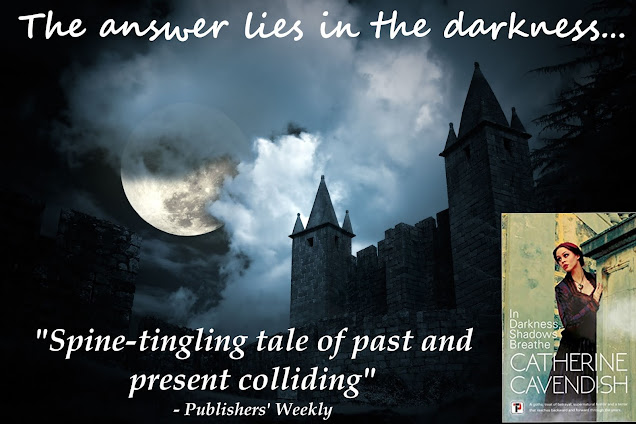
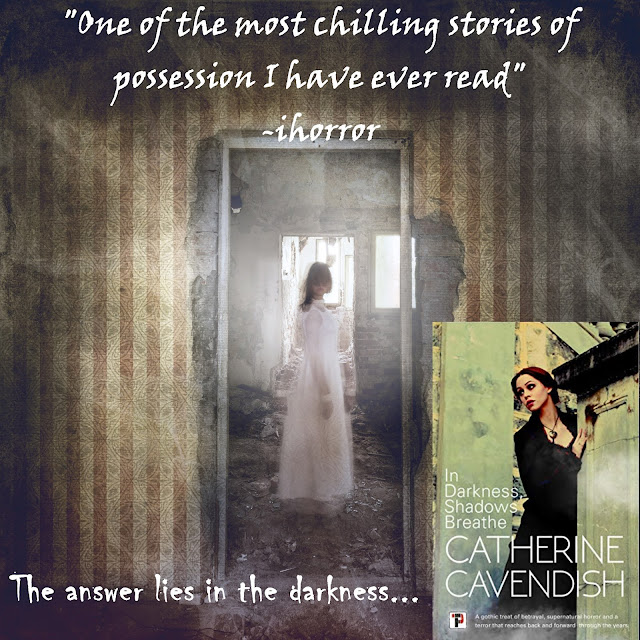
In Darkness, Shadows Breathe...For only 99c/99p!


"Cavendish shines in the ways she’s connected to the story, making herself vulnerable to not only her readers but to the ghosts that haunt her." -- Aiden Merchant

The above extract from a review by Aiden Merchant struck a real chord with me. Of all the novels, novellas and short stories I have written so far, In Darkness, Shadows Breathe is the one that resonates the most. The reason is simple. My character, Nessa, is suffering from the same cancer I had. Not that this book is in any way the story of a woman battling the Big C, but her tangled emotions are ones I identify with closely.

Of course, in my case, I didn't also have to fight a deadly evil lurking in the corridors of a hospital. Nor did I have to take on surreal time-slips, doors which shouldn't have been there, or a fellow patient with something rather more than a medical problem!

And that's only for starters. What about Carol? The main character of the first half of the story?

Ah...but that would be telling too much, wouldn't it?

Find out for yourself and, if you act now, you'll get the full story for only 99cents or 99p depending on whether you live in the UK, US, Canada or Australia.

"...if there is a crown of queen of gothic horror, [Catherine Cavendish] should be wearing it." — Modern Horrors

"A compelling, immersive, and intense time-slip horror novel with sympathetic characters that readers actively root for. The tale reads like The Devil in Silver by Victor LaValle if it were written by Sarah Pinborough." -- Library Journal

"Cavendish breathes new life into familiar horror tropes in this spine-tingling tale of past and present colliding" - Publishers' Weekly

“In Darkness, Shadows Breathe” is a treat for those who are in the mood for scary, supernatural horror." Rajiv’s Reviews


You're next...

Carol and Nessa are strangers, but not for much longer.

In a luxury apartment and in the walls of a modern hospital, the evil that was done continues to thrive. They are in the hands of an entity that knows n boundaries and crosses dimensions - bending and twisting time itself - and where danger waits in every shadow. The battle is on for their bodies and souls, and the line between reality and nightmare is hard to define.

Through it all, the words of Lydia Warren Carmody haunt them. But who was she? And why have Carol and Nessa been chosen?

The answer lies deep in the darkness...

From Jan 26th-30th In Darkness, Shadows Breathe is available for only 99c/99p from:


T shirt design by Ilan Sheady

Images:
Shutterstock
Flame Tree Studio

Monday, 17 January 2022

Spring-Heeled Jack


They seek him here, they seek him there…but Spring-Heeled Jack can turn up anywhere.

Here is a legend that first began in early Victorian England. A man with the apparent ability to leap over walls and capable of turning up anywhere from the Black Country (in the Birmingham, West Midlands area) to Liverpool, Chichester, and London - even a foray to Scotland. Sightings of this fantastical and scary creature grew to a peak in the 1880s – especially in the West Midlands.

So what did he look like? Descriptions vary with the witness, but some characteristics occur more frequently than others. He was alleged to possess a goatee beard and devil’s horns, pointed ears, and flashing eyes of fire. The popular Penny Dreadfuls of the day depicted him looking like a swarthy devil. Another feature common to all sightings was his ability to leap high over hedges, walls, rooftops with complete ease. He terrified his victims by suddenly leaping in front of them, or up behind them.


 In 1855, one report saw him in Old Hill in the West Midlands, where he leaped from the roof of the Cross Inn public house over to the roof of the butcher’s shop across the road. This occurrence was swiftly followed by reports of other sightings in the area and a wave of panic from the local populace.

A period of quiet was followed in 1877 was followed by a whole spate of sightings in Blackheath, Dudley and the Acocks Green area of Birmingham in 1877. Spring-Heeled Jack continued to be active through the 1880s. The Birmingham Post in 1886 reported that: “First a young girl, then a man, felt a hand on their shoulder, and turned to see the infernal one with glowing face, bidding them a good evening.”

 He usually appeared at night and targeted mainly young women. Originally his intention appears to have been to scare rather than cause actual harm to his victims. But before too long, he tired of this tame pursuit and his modus operandi turned from scary to full blown assault. On one occasion, he was said to have been accompanied by companions, all dressed in armour, who attacked a carpenter, ripping his clothes to shred. There was a suggestion in the press that the assailants were a group of, essentially bored, young gentlemen out to get their kicks by frightening people so much they lost their wits. Most of the people prepared to talk to the newspapers about Jack presented mere hearsay. It hadn’t happened to them, but to a friend of a friend.


 The first credible account came from 18-year-old Jane Alsop who, in February of 1838, reported to magistrates that she had been approached by a man dressed in a cloak, near the gate of her home in Bearbinder Lane, near Bow, London. He had asked her to bring a candle as the police had caught Spring-Heeled Jack nearby. She duly did so. He took the candle from her, opened his cloak and she caught sight of his “hideous and frightful appearance”. He then vomited a blue and white flame and his eyes became like “balls of fire”. He wore a helmet and tight-fitting clothes and he began to set about her with metal claws, ripping her dress and tugging out her hair. She managed to escape his clutches when her older sister, hearing her cries, opened the door and dragged her inside before shutting the beast firmly out.

In Limehouse, London, a girl called Lucy Scales, along with a female friend, was accosted by a gaunt man, of seemingly gentlemanly appearance. She was so scared she collapsed in a fit. In this instance, two men were actually brought to court charged with her assault but were released owing to lack of evidence.

 Outside London, Spring-Heeled Jack seems to have toned down his fire-vomiting behaviour in favour of his more athletic accomplishments and, for the rest of the century, it is for this incredible ability to leap to great heights that his fame persisted and spread. 

In 1904, in Liverpool during one of his last appearances, he was reported as leaping over rooftops and bounding down the street. He was even reported as being seen on the rooftop of St Francis Xavier’s Church in Salisbury Street in the Everton district of the city.

By the end of the nineteenth century, his notoriety was such that almost any strange encounter with a swift-footed criminal could result in Spring-Heeled Jack’s name being associated with it. In Edwardian times, his name was quoted to children by parents, to ensure they came home before dark. A convenient and effective bogeyman.

 There were rumours that he was a real person – Henry de la Poer Beresford, the Marquess of Waterford no less, who was certainly in London at the time of the 1830s sightings and was known to be something of a rake at the time, being hauled up before magistrates for drunken, brutish and outlandish behaviour on more than one occasion. However, that wouldn’t account for all the other sightings or the fact that the legend persisted into the twentieth century, with no apparent diminishing of athletic prowess that would be caused by the natural aging process. 

No one was ever convicted of the assaults he is alleged to have committed and some sources at least believe he was capable of the earlier attacks but, following his marriage in 1842, he appears to have led a blameless life. Maybe he had imitators.

These days, Spring-Heeled Jack is once again providing entertainment for the masses, through steampunk literature and appearance in popular TV shows, such as Dr. Who. No doubt, as with most urban myths, there is a grain of truth there somewhere, but rumour, numerous retellings and embellishments have gifted us a larger-than-life character that merely adds to our cornucopia of rich folklore traditions.

Of course… if you are out one dark night and see a strange man leaping over the rooftops,  you may yet prove me wrong…

 (If you want to know more about Spring-heeled Jack, try this book by Dr Karl Bell The Legend of Spring-Heeled Jack)


Images:
Wikipedia
Boydell Press


Wednesday, 12 January 2022

Creepy, Gothic and Ghostly - And Only 99c/99p - This Week Only


Don't play the game...

In 1893, Evelyn and Claire leave their home in a Yorkshire town for life in a rural retreat on their beloved moors. But when a strange toy garden mysteriously appears, a chain of increasingly terrifying events is unleashed. 

Neighbour Matthew Dixon befriends Evelyn, but seems to have more than one secret to hide. Then the horror really begins. The Garden of Bewitchment is all too real and something is threatening the lives and sanity of the women. Evelyn no longer knows who - or what - to believe. And time is running out.


“The Garden of Bewitchment is everything you want in a modern ghost story.” – James Lefebure, Modern Horrors

“Cavendish draws from the best conventions of the genre in this eerie gothic novel about a woman’s sanity slowly unraveling within the hallways of a mysterious mansion...Fans of gothic tropes will appreciate the atmosphere and intensity of this horror tale.” – Publishers’ Weekly

"Classic Gothic terror" - Horrifiedmagazine.co.uk


“Cavendish is a master storyteller” – ihorror

“A brilliantly written, atmospheric and goosebumpy read. You’ll never look at a doll’s house in the same way again!” – The Bookwormery

“Well written, complex, satisfyingly nostalgic and darn right diabolical” – Brown Flopsy’s Book Burrow

“Seeped in Gothic imagery” – Horror After Dark

“Atmospheric and rich in detail, Cavendish masterfully draws the reader into the slow-burning horror that makes well-crafted Gothic literature so delightfully addictive.” – The Nerd Daily

“A unique and haunting tale” – A Reviewer Darkly


“When you sit down with a Catherine Cavendish story, you are guaranteed three things – a haunting atmosphere, a wild imagination, and fascinating characters.” – She Leads, He Reads

The Garden of Bewitchment is yours for just 99p/99c but hurry. Offer ends January 16th right here on Amazon


Images:
Shutterstock
Flame Tree Studio
Photofunia

Friday, 24 December 2021

Dr. John Dee - Charismatic Eerie Genius of the Elizabethan Age


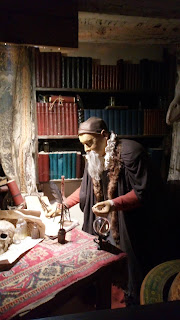
A recent visit to Stratford upon Avon – famously the birthplace of William Shakespeare – saw my husband and I making a trip to a place that fascinated me. Tudor World is to be found right in the centre of the town housed in a sixteenth century building known as the Shrieve’s House (formerly owned by Henry VIII).

Here, in a series of beautifully constructed rooms, scenes from everyday life in Tudor England are reimagined, including their home life, education, superstitions and beliefs, and it is in these latter two areas that my interest was well and truly spiked, For here, suddenly (and not for the first time), I was brought up close and personal with that most enigmatic of Tudor characters, Dr. John Dee.

Known as ‘Conjuror to Queen Elizabeth’, he was a man of many talents and many parts. He has long captured my imagination and attention and the display at Tudor World simply reignited the flame that has been burning away at the back of my mind for years.

So who was he?

Some say scholar, academic, others alchemist, scientist, necromancer, witch…and spy. in truth, arguments could be made to support all of these claims. The latter one is well documented. Dee was ‘recruited’ to act as a spy for Elizabeth owing to his extensive contacts. He would send reports to her, signed, 007. The two zeros represented the Queen’s eyes (as in, ‘for your eyes only’) and seven was his lucky number. Yes, you’ve guessed it. Ian Fleming had heard of John Dee when he came up with his super spy, James Bond. Another person who was influenced by him was none other than the Bard of Avon himself, William Shakespeare. Remember those witches in Macbeth? Just one example.

John Dee was born in London on July 13th 1527. From his earliest years, it became apparent to his father (a minor figure at Henry VIII’s court) that his son was possessed of a fearsome intellect. At the tender age of fifteen, the young Dee attended Cambridge University where he spent twenty out of every twenty-four hours in deep study. Latin, Greek, Mathematics, Medicine, Astronomy, Geometry were just some of his subjects – along with Cryptography, such a valuable skill for a future spy.

Still in his twenties, he moved to Paris where he lectured in Algebra and must have been a powerful and charismatic teacher because he swiftly became popular and widely respected, packing the halls whenever he spoke, at venues throughout Europe. He rose to become England’s top scientist, developing navigational systems that would help transform his country into the naval superpower it would become under Elizabeth.

It was while he was at the University of Louvain in the Netherlands that Dee studied the occult. This was not unusual in those days as the study of science and magic went hand in hand with the constant quest to understand the nature of God.

With such fame and reputation, he was bound to come to the attention of the new monarch. In fact he did so before she was even crowned. When Elizabeth I inherited the throne, Lord Dudley asked Dee to predict the most propitious day for her coronation. From then on, the Queen studied his mystical writings and took to regular consultations with her new ‘conjuror’. Many years later, she took his advice on the timing of the English attack on the Spanish Armada. Dee, it was said, cast a spell that brought huge waves crashing down on the enemy fleet as they advanced toward England’s shores. More likely, he used his knowledge of Meteorology to predict oncoming severe storms. Whatever the truth of it, he got his calculations right. Elizabeth followed his advice and the attack took place precisely following Dee’s advice.

With such a track record of success, Dee’s star could only rise, and it did. Having said that, the Queen made many promises to him that she failed to honour.

Such formidable intellect as Dee’s often treads a precarious path between genius and madness, and Dee appears to have been no exception. As he grew older, he became increasingly obsessed with communicating with angels, using various forms of necromancy including scrying (using a crystal). The results were disappointing but then he recruited a somewhat dubious character, many years his junior. Edward Kelley was twenty-six, an apothecary afflicted with alcoholism who had been punished for counterfeiting coins (he had had his ears cropped). He seems to have won over the academic with his claims for success in the fields of scrying and sorcery and because he claimed to have discovered the famed philosopher’s stone. Dee may have been convinced by him but his wife, Jane, detested him. She clearly believed him to be a charlatan who would drag her husband’s name and reputation into the gutter. Ignoring her concerns, Dee collaborated with Kelley for the next ten years, reporting success on contacting the angels who would transmit pronouncements and prophecies, but the rot was setting in.

In 1583, Dee and Kelly left England for Poland and while he was away, his house, with its incredible library (by far the largest in the country) was ransacked by a mob who believed him to be a wizard. Manuscripts and books were burned and destroyed. When he returned, his frequently fluctuating fortunes vastly depleted and following a final quarrel with Edward Kelley, plague swept England.  Dee was widely blamed for it, even though it took his wife and four of their eight children.

The Queen helped him out of his parlous financial state and in 1595, he became warden of Manchester College.

When Elizabeth I died in 1603, the pendulum finally swung toward penury where it would remain for John Dee. Under the anti-sorcery. witch-hating James I, he was in a precarious position. Penniless and ageing, he spent the rest of his days selling his books and casting bespoke astrological charts. He was eighty-one when he died – a grand old age for those pestilence-ridden days. He was buried in Mortlake where he had made his home for so many years. Don’t go looking for a gravestone though as it has long since disappeared. However, if you are ever in Manchester, take a trip to the oldest public library in the English-speaking world– Chetham’s Library – where a scorch mark on a desk is said to have been made by the cloven hoof of a devil, conjured up by the good doctor himself…

 Now it only remains for me to wish you and yours the best of times and happiest of festive seasons. Don’t forget to curl up with a good ghost story. M.R. James perhaps. Or you can try one of mine if you like. Here’s a couple to be going on with:


 See you all, safe and sound I trust, in 2022.


Images:

Author's own (photographed at Tudor World, Stratford upon Avon)

Shutterstock

Crossroad Press

Silver Shamrock Publishing